Secondary Glazing for Bay Windows: Best Options and Costs
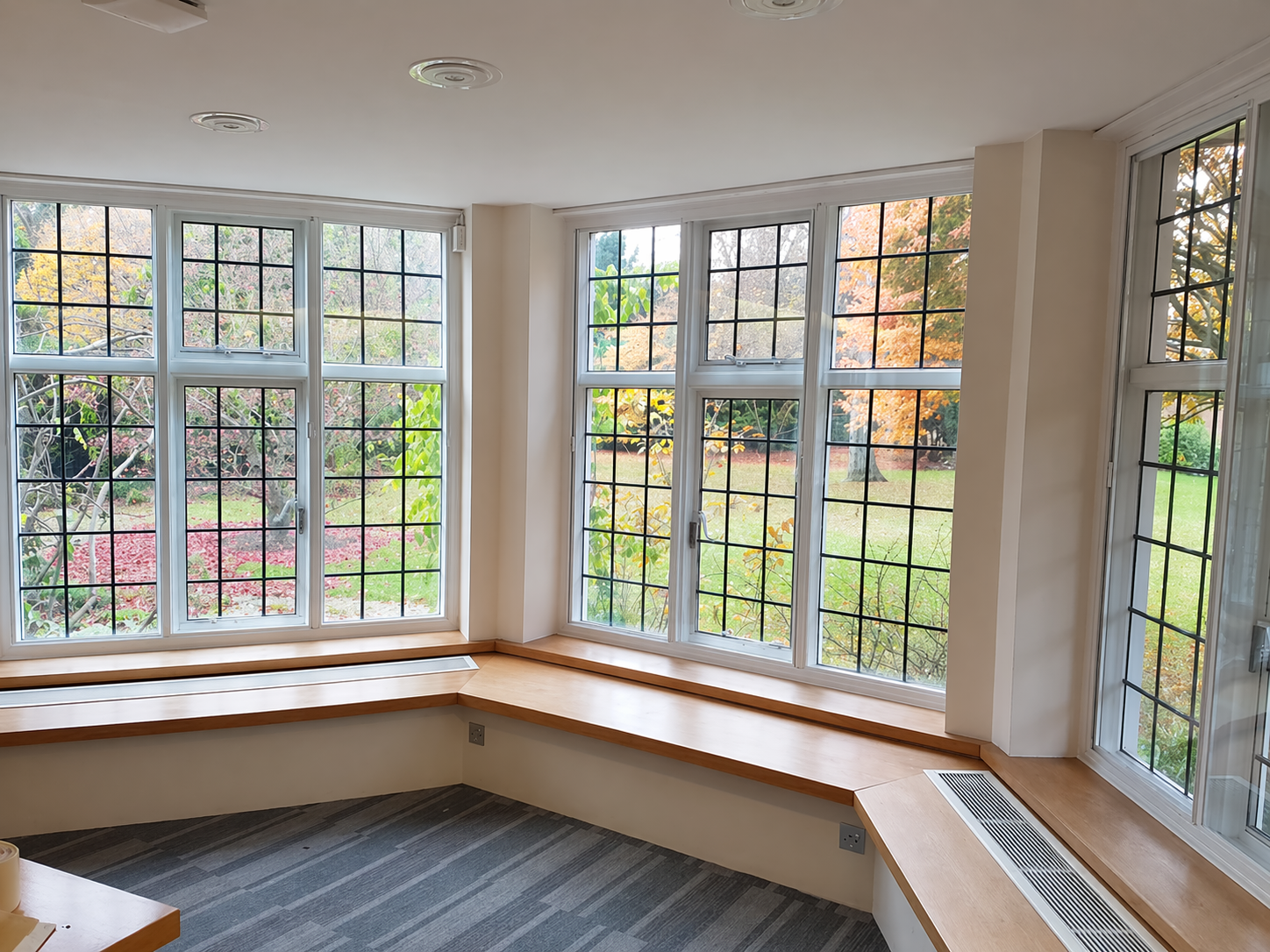

Bay windows present a challenge that most secondary glazing suppliers quietly sidestep. The geometry alone involves three or more panes set at angles to each other, often with a projecting sill, sometimes topped with a shaped or angled head. This means standard off-the-shelf panels simply do not fit. If you’ve already looked into secondary glazing for your bay and come away with vague answers, that’s why.
The good news is that secondary glazing for bay windows is entirely achievable and, done properly, delivers the same dramatic improvements in thermal performance, noise reduction, and draught control as any other window in the house. It just requires the right product, matched to the geometry of your specific bay. This guide walks through the options that actually work, what each costs, and how Clearview approaches bay windows differently to most.
Why Bay Windows Need a Different Approach
A standard rectangular window is, in fitting terms, forgiving. You measure the reveal, order to size, and fix it in. A bay is more demanding. The central panel may be wide enough to require a multi-panel unit. The side returns sit at an angle. In a canted bay, that’s typically 45 degrees. In a box bay, 90 degrees. Each return is often a different width from the other. In period properties, the reveal depths can vary between panels too, depending on how many times the bay has been decorated or repaired over the decades.
This matters because secondary glazing sits inside the existing window frame, so the units for each section of the bay need to be ordered and fitted individually. You’re not fitting one big panel across the whole bay. You’re treating each section as a discrete window and selecting the right product type for each.
Clearview manufactures every unit to measure. There are no standard sizes and no guesswork. Once you’ve taken the measurements, or had a professional survey carried out, each panel is made specifically for that opening. This is how secondary glazing in a bay should always work.
The Best Secondary Glazing Options for Bay Windows
Horizontal Sliders
The horizontal slider is Clearview’s most popular product for a reason: it handles large openings exceptionally well and suits the wide central panel found in most bay windows. Units can be configured with two, three, four, or five sliding panels depending on the width. The maximum manufactured size is 4,900 x 2,700mm, well in excess of anything you’ll encounter in a domestic bay.
For the central section of a canted or box bay, a horizontal slider is usually the first choice. The panels glide on brass roller glides, access to the primary window is straightforward, and the unit can be manufactured up to 80kg, giving you real flexibility on glass specification if acoustic performance is a priority.
Price for horizontal sliders starts from £170. For a typical bay window central panel (say, 1,500 x 1,200mm), you should budget accordingly based on size. Use the FastQuote tool for an instant figure based on your exact measurements.
Hinged Casement
For the side returns of a bay window, a hinged casement is often the better fit. Returns in a canted bay are typically narrower. 400 to 700mm is common. A slider on a panel that narrow would give you limited usable opening. A hinged casement swings inward on a single hinge, giving full access to the primary window and a clean, unobtrusive appearance.
The hinged casement units starts from £200 and handles panels up to 1,400 x 1,800mm with a maximum weight of 65kg. For commercial applications, or where acoustic glass specification pushes the weight up, the Heavy Duty Casement goes to 100kg and 1,500 x 3,000mm, and is the only unit in the Clearview range capable of accepting a full 28mm sealed double-glazed unit.
For narrow side returns, the multipoint locking on the casement also makes it the most secure option in the range. This is worth noting if the bay faces a ground floor elevation accessible from outside.
Lift-Out Panels
Lift-out units are the most cost-effective option in the range, starting from £140. For bay windows where access to the primary window is infrequent (a bay in a study or spare bedroom, for example), they’re a practical choice for the side returns. The Easy Lift Fin makes them simple to remove for cleaning, and they can be manufactured in portrait, landscape, or arched configurations.
They’re not the right choice if you open your windows regularly, or if the primary window needs easy access for maintenance. But as a straightforward, durable, thermally effective solution for an angle return that rarely needs to be disturbed, they do the job well.
Fixed Inserts
Fixed inserts are the simplest product in the range: a slim 17x19mm frame, face-fixed, semi-permanent. At £140, they’re the entry point on cost. For bay windows, they work well in situations where the primary window is sealed or where you simply want maximum thermal and acoustic performance with minimum hardware. Because they don’t open at all, they maximise the air gap and eliminate any draught path around the frame.
They’re not suitable if you need ventilation from the bay. But in a Victorian parlour bay that’s decorative as much as functional, they’re worth considering. This is particularly true for sections of the bay that face a noisy road, where every millimetre of air gap counts.
Bespoke Shaped Units
Some bay windows, particularly in late-Victorian and Edwardian properties, include shaped heads. These could be curved top sections, angled lights, or decorative fanlights above the main pane. These can be glazed with bespoke secondary glazing units manufactured to the exact template. Clearview produces secondary glazing for arched, oval, gothic, curved bay, circular, and raked-head configurations, all starting from £140.
If your bay has any shaped element, templates are required for manufacturing. We provide printable measuring templates for standard configurations, and the team will work through the requirements with you if the shape is more complex.
What Does Secondary Glazing for a Bay Window Cost?
There’s no single figure that covers every bay window. The honest answer is that cost depends on the number of panels in the bay, the sizes of each, the product type you choose for each section, and your glass specification. What we can give you is a framework.
Secondary glazing for bay windows typically runs at roughly half the cost of double glazed replacement for the same openings. The 25% online saving available through Clearview’s DIY secondary glazing supply route makes that gap even wider.
Does Glass Choice Affect the Cost?
Yes, and it’s worth understanding how. The base specification is 4mm toughened glass, which meets Building Regulations and delivers around 45dB of noise reduction with the right air gap. If the bay faces a main road, a railway line, or any significant noise source, upgrading to 6mm toughened (around 49dB+) or 6.4mm acoustic glass using Stadip Silence PVB interlayer (51 to 53dB) will add to the unit cost but deliver meaningfully better results. The air gap between primary and secondary window also matters. For acoustic performance, you want a minimum of 100mm and ideally 150 to 200mm.
For thermal performance, Low-E glass (Pilkington K Glass) improves insulation by 65% over standard glass and brings the U-value down to a certificated 1.868 W/m²K. That’s equivalent to modern double glazing, achieved without touching the primary window.
DIY or Professional Installation?
Both routes are available through Clearview, and both produce the same result: a fully assembled, pre-glazed unit manufactured to your exact dimensions and delivered to your door on Clearview’s own Mercedes Sprinter fleet (not a courier).
DIY fitting is realistic for most homeowners. A standard window takes under an hour. A bay window with three panels would typically be a morning’s work. You don’t need glazing experience. The units arrive ready to install, and Clearview provides ten measuring templates to guide the measurement process from the start. The online FastQuote route saves 25% over the professionally-installed price.
Professional installation is available within approximately 50 miles of Sheffield. The process starts with a formal site survey (£150, deducted from the final balance) that captures precise measurements, photographs, and method notes. Installation typically follows within 10 to 14 weeks from survey. For bay windows with complex geometry, or where the property is listed and the installation approach needs to be sympathetic to the fabric of the building, professional installation gives you confidence that every panel is fitted correctly from the outset.
Secondary Glazing for Listed and Period Bay Windows
Bay windows in listed buildings present their own specific considerations. Double glazing is not normally permitted in listed properties. Conservation officers consistently reject it on the grounds that it alters the external appearance and removes original fabric. Secondary glazing is the accepted solution. All Clearview systems are approved for use in Grade I and Grade II listed buildings and conservation areas, and the company is a National Trust supplier with units fitted in properties including Sudbury Hall, Hardwick Hall, and Kedleston Hall.
The critical advantage for listed bay windows is that secondary glazing sits entirely inside the building. From the street, nothing changes. The original glazing bars, glass, and timber frames remain untouched. Conservation officers see secondary glazing as the appropriate response precisely because of this.
For bay windows in conservation areas (where listed building consent is not required but visual impact still matters), the same principle applies. Secondary glazing does not change what the house looks like from outside. That makes it the lowest-friction improvement available.
The Clearview Guarantee
Every unit comes with a 10-year guarantee on aluminium frames and glazing. Moving parts such as springs, locks, handles, and rollers carry a 2-year warranty. You can read the full guarantee terms on the about us page.
For a product fitted into a bay window and left in place for decades, the durability of aluminium frames matters. Unlike uPVC, aluminium does not warp, yellow, or lose its profile over time. The powder-coated finish is available in over 200 RAL colours, so if your bay window has been painted in a specific heritage colour, the secondary glazing frame can match it.
Recommended Posts
How Long Does Secondary Glazing Last?
24/04/2026