
Secondary Glazing for Schools, Colleges and Universities

A classroom with poor acoustic separation from a corridor, a playground, or a main road loses teaching time before a single lesson objection is raised. Pupils strain to hear, teachers raise their voices to compete with it, and everyone adapts to a background noise level that should never have been accepted in the first place. Secondary glazing addresses this directly, on buildings ranging from 1960s system-built blocks to Victorian board schools that are themselves listed.
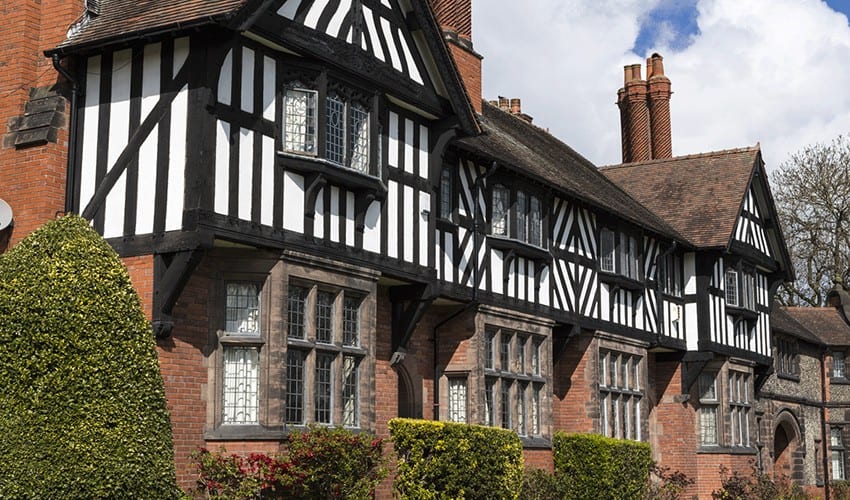
Clearview has supplied secondary glazing to Sheffield University’s Firth Hall, alongside residential and institutional heritage projects across the country.
Why acoustic performance matters more in education settings
Building Bulletin 93 (BB93) sets the acoustic design standards for UK schools, covering internal ambient noise levels and sound insulation between teaching spaces. Meeting those standards in an existing building, rather than a new build designed around them from the start, usually means improving the windows, since glazing is typically the weakest point in a classroom’s acoustic envelope.
Secondary glazing, properly specified with an adequate air gap and glass choice, reduces external noise by up to 80%, over 50 decibels, roughly five times greater than standard double glazing achieves. For a school on a busy road, near a railway line, or under a flight path, that is frequently the difference between meeting BB93 and continuing to fail it.
Listed and heritage school buildings
A significant number of Victorian and Edwardian board schools carry statutory listing, reflecting the civic investment that went into public education buildings of the period. These schools face the same restriction as any other listed property: standard double glazed replacement windows are commonly refused, on the same conservation grounds that apply to a listed house.
Secondary glazing avoids the problem entirely. It sits behind the original window, on the room side, and does not alter the external appearance of a listed school building, which is generally what a conservation officer is assessing when a listed education building applies for consent to improve its windows. For the wider argument on heritage buildings, our guide to secondary glazing for listed buildings covers the reversibility case in full.
Thermal performance across large estates
Schools built through the 1960s and 1970s often carry single glazing across extensive window walls, a design choice that made sense for daylight at the time and is now a significant source of heat loss. A certificated U-value of 1.868 W/m²K, against roughly 5.8 for the single glazing behind it, represents a 65% thermal improvement applied across an entire estate’s window area, with a heating bill reduction of up to 15% following through into a school’s running costs.
For estates managers weighing capital spend against ongoing energy costs, secondary glazing typically pays back its cost within 3 to 8 years, well inside the useful life of the installation itself.
Specifying differently for different spaces
Not every room in a school needs the same specification. Teaching spaces, particularly those used for exams, language learning or anywhere sustained concentration matters, benefit most from the higher end of the acoustic range, 6.4mm or 6.8mm acoustic laminate with a properly specified air gap. Corridors, halls and non-teaching areas can often work well with a standard toughened specification at a lower cost, reserving budget for the rooms where noise genuinely affects learning outcomes.
A site-wide survey identifies which spaces face which noise sources, road, playground, plant equipment, or a neighbouring classroom, and specifies accordingly rather than applying one blanket standard across a whole estate regardless of need.
Independent and boarding schools in historic buildings
A number of independent and boarding schools occupy country houses, former manor houses or other listed buildings that were never designed as educational settings, and face the heritage constraints of any listed property alongside the acoustic and thermal demands of daily teaching use. Secondary glazing suits these buildings for the same reason it suits any other listed property: it improves performance without altering the historic fabric a school of this kind is often specifically required to preserve as a condition of its use of the building.
Funding and procurement
Academy trusts and voluntary-aided schools in poor condition may be eligible for capital funding through the Condition Improvement Fund (CIF), which covers building condition needs including window and thermal upgrades. Many schools, colleges and universities also purchase through established frameworks such as ESPO or the Crown Commercial Service. If your institution procures through one of these routes, tell us when you enquire and we can talk through how a Clearview quote fits your process.
Reducing internal noise between teaching spaces
BB93 covers more than just noise coming in from outside. It also sets standards for sound transfer between adjoining teaching spaces, corridors and communal areas, which matters most in older buildings where partition walls were never designed with acoustic separation in mind. Where a corridor or hall sits directly against a classroom, secondary glazing fitted to any internal glazed screens or borrowed lights between the two spaces can reduce that transfer in the same way it reduces noise from outside, using the same air gap principle.
This is a less commonly considered application than external noise, but for schools built with internal glazed partitions, a common feature of mid-century system-built blocks, it is worth including in a full acoustic survey rather than treating external noise as the only consideration.
Daylight, glare and existing window film
Some schools have already fitted solar control or privacy film to existing windows to manage glare or overheating in south-facing classrooms. Secondary glazing does not conflict with this. The new unit sits independently on the room side, so any film already applied to the original window continues to do its job unaffected, and where glare remains a problem after fitting, a further specification such as tinted or obscure glass can be added to the secondary unit itself rather than reapplying film to the historic window.
Suitable for occupied buildings
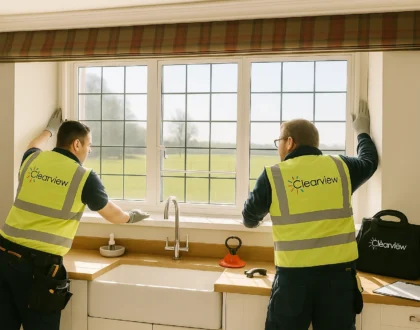
Term-time works are a genuine constraint most commercial glazing suppliers do not deal with day to day. Secondary glazing installation does not require the original window to be removed, which means individual classrooms or blocks can be completed with minimal disruption, and the work can often be scheduled around timetables rather than requiring a full building closure. Fitting professionally typically takes under an hour per standard window.
<blockquote> “As a surveyor, I can tell you that Clearview’s work is high quality.” *Peter Inman, surveyor* </blockquote>
A track record with institutional buildings
Beyond the education sector specifically, Clearview’s commercial secondary glazing work spans a range of institutional and heritage settings, backed by 20 years of manufacturing experience, Which? Trusted Trader accreditation, and membership of bodies including the Listed Property Owners Club and the Historic Houses Association. Full details of our accreditations are available for procurement teams who need them for a tender or approval process.
Frequently asked questions
Does secondary glazing help schools meet BB93 acoustic standards? Yes. Properly specified secondary glazing with an adequate air gap and acoustic glass can achieve significant noise reduction, often addressing the specific weak point in a classroom’s sound insulation.
Can secondary glazing be fitted to a listed school building? Yes, in most cases, since it does not alter the external appearance of the original window. As with any listed property, it is worth confirming the specific position with your local conservation officer before proceeding.
Is secondary glazing suitable for occupied school buildings during term time? Yes. Installation does not require removing the original window, and standard windows are typically fitted in under an hour each, which allows work to be scheduled classroom by classroom or block by block.
Does secondary glazing qualify for Condition Improvement Fund support? Window and thermal upgrades are within the scope of works CIF is designed to fund for eligible academies and voluntary-aided schools. Check current CIF guidance and eligibility criteria for your institution directly.
Has Clearview worked with universities before? Yes. Clearview has supplied secondary glazing to Sheffield University’s Firth Hall, among other institutional projects.
Do all rooms in a school need the same glass specification? No. Teaching spaces facing a noise source generally benefit from acoustic laminate, while corridors and non-teaching areas often work well with a standard specification, which helps manage budget across a full site survey.
Can secondary glazing be fitted to a school that occupies a listed building? Yes. The same reversibility principle that applies to any listed property applies here, and independent schools in historic houses are a common example of exactly this situation.
Talk to us about your estate
Whether you are looking at a single teaching block or a full estate-wide upgrade, contact our team to talk through specification, timing around term dates, and how a quote fits your institution’s procurement route.
Recommended Posts
How Long Does Secondary Glazing Last?
24/04/2026