
Secondary Glazing Solutions for Historic and Listed Buildings
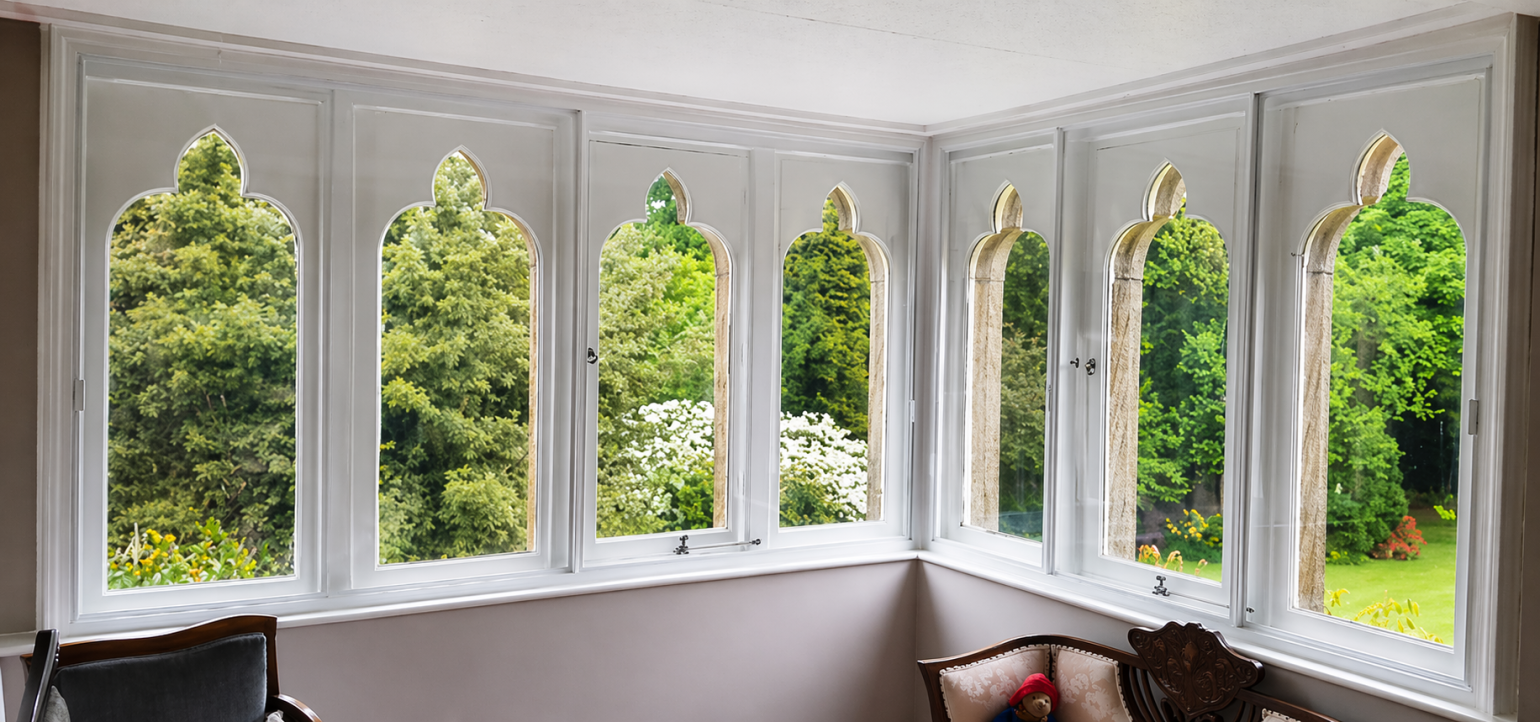

If you own a listed building, you’ve probably had the same conversation more than once. The draughts are getting worse, the noise from the road is relentless, and condensation keeps appearing on those original timber frames. But every time you look into replacing the windows, you hit the same wall: conservation officers, listed building consent, and the very reasonable concern that you’d be destroying something irreplaceable to fix a problem that has better solutions.
Secondary glazing is that solution. We’ve been manufacturing and fitting it into Grade I and Grade II listed properties for over 20 years, including for the National Trust at Sudbury Hall, Hardwick Hall, Belton House, and Kedleston Hall. If you’re researching your options, here’s everything you need to know about secondary glazing for listed buildings in 2026.
Why Secondary Glazing Works for Listed Buildings
The fundamental reason conservation officers prefer secondary glazing over double glazing is reversibility. A secondary glazing system sits on the inside of your existing window and is fixed in place with screws. It can be removed without leaving so much as a mark on the original fabric of the building. That matters enormously when the window you’re protecting is 200 years old.
Secondary glazing also preserves the external appearance of the building entirely. The aluminium frame fits inside the reveal, invisible from the street. For a property in a conservation area or a Grade I listed building, that is not a minor point. It is often the deciding factor for planning purposes.
Historic England actively recommends secondary glazing as best practice for improving the thermal performance of traditional buildings. Glasgow University research, commissioned by English Heritage and Historic Scotland, confirmed that secondary glazing outperforms replacement double-glazed windows for thermal efficiency in traditional buildings. That finding is based on the physics of how heat moves through old buildings, not just a preference for keeping things as they are.
For more information on how Clearview approaches heritage properties, visit our dedicated secondary glazing for listed buildings page.
The Performance Case: Thermal, Acoustic, Condensation
It would be easy to assume that a product designed around preservation would involve some compromise on performance. It doesn’t. Secondary glazing fitted to a single-glazed sash window achieves a certificated U-value of 1.868 W/m2K, down from around 5.8 W/m2K for single glazing alone. That puts it firmly within the 1.5 to 2.5 W/m2K range you’d expect from a standard double-glazed unit, and with no disruption to your home, no redecoration, and no landfill.
On acoustic performance, secondary glazing is in a different class to double glazing. Our systems reduce outside noise by up to 80%, or over 50 decibels, five times greater than either double or triple glazing. For a listed building on a busy road or near a railway line, that difference is significant. Matthew James, owner of a Grade II listed property dating from 1850, described the result plainly: ‘Best investment in my property so far. Since I fitted the units condensation has been eliminated, no more draughts and external noise has been greatly minimised. They’re so good I’ve yet to put the heating on this year.’
Condensation is the third problem secondary glazing addresses. Single-glazed windows in older properties act as a cold surface for warm indoor air to condense against. Secondary glazing raises the temperature of the inner pane, reducing the point at which condensation forms. We can’t guarantee a total cure in every case, but the track record is strong. Melanie Sanderson told us: ‘The most welcome change is that condensation no longer drips from the bay window.’
Planning Permission and Listed Building Consent
This is often where people expect the most complexity. The reality is simpler than many assume.
Secondary glazing typically does not require planning permission. Because it is installed internally and does not alter the external appearance of the building, it generally falls outside the scope of planning control. For properties in conservation areas, where Article 4 Directions restrict external alterations, an internal secondary glazing installation is usually treated as a permitted alteration.
For Grade I and Grade II listed buildings, we recommend consulting your local conservation officer before proceeding, particularly if the internal historic features are of significance. In practice, the vast majority of secondary glazing installations in listed buildings are approved without difficulty. Our systems are approved for use in Grade I and Grade II listed properties and conservation areas, and we have 20 years of experience working alongside conservation teams across the UK.
Choosing the Right System for Your Property
Not all secondary glazing is the same, and the right choice depends on your window type, how much access you need, and what you’re primarily trying to address. Here’s how our range applies to the most common listed building scenarios.
Vertical Sliders
The preferred choice for Georgian and Victorian sash windows. The secondary panel slides up and down in the same way as the primary window, which means the sash window beneath can still be operated normally. Clearview’s Tilt-In variant also provides fire egress compliance, which matters for upper-floor rooms.
Hinged Casement
Suited to properties with timber casement windows, including Tudor, Arts and Crafts, and mid-century properties. The hinged casement secondary panel opens outward on a piano hinge, giving full access to the primary window for cleaning and ventilation. It’s our most secure option, with multipoint locking as standard.
Lift-Out Panels
The simplest and most reversible option. The panel lifts out of its frame entirely, leaving no obstruction. For rooms where you rarely need the window open but want maximum thermal or acoustic benefit, lift-out panels are an efficient and cost-effective choice.
Fixed Inserts
Where access to the primary window is not needed at all, a fixed insert provides the simplest possible installation. The frame is screwed directly to the existing window surround, with no moving parts. These are common in heritage properties where windows have been sealed or are purely decorative.
All of our products are available as DIY supply, or with professional installation within approximately 50 miles of Sheffield. Take a look at our full product range to see sizing, glass options, and configurations.
Glass Options for Listed Building Performance
The air gap between your primary window and the secondary panel is the single most important factor in performance. For thermal improvement, a gap of 50 to 80mm is sufficient. For acoustic performance, you want a minimum of 100mm, with 150 to 200mm giving optimum results.
Glass choice matters, particularly for noise. Our standard 4mm toughened glass achieves around 45 dB reduction. Upgrading to 6mm toughened pushes that to 49 dB or more. Our acoustic laminate glass, Stadip Silence PVB, is available in 6.4mm and 6.8mm and achieves 51 to 53 dB reduction. For properties where noise is the primary concern, this is the specification we’d recommend.
Low-E glass (Pilkington K Glass) adds an invisible coating that increases thermal performance by a further 5 to 10% and delivers our certificated U-value of 1.868 W/m2K. It’s particularly relevant for listed buildings where energy efficiency matters alongside conservation compliance.
What Does Secondary Glazing for Listed Buildings Cost in 2026?
Prices start from £163.66 per window for a DIY supply order. For a 950mm x 1800mm sash window, a typical secondary glazing unit costs around £295 supplied. The equivalent uPVC double-glazed sash replacement is approximately £650 for the same size and, in many listed buildings, would not be permitted at all.
For listed building owners comparing secondary glazing to sympathetic double-glazed replacement options, the cost saving is approximately 80%. That figure comes from real customer quotes, not projections. One customer told us their total cost with Clearview was £800 including VAT, against a local quote of £1,650 plus VAT for a comparable result.
DIY orders placed through our FastQuote tool attract a 25% saving over the equivalent phone or trade order. Lead times for standard rectangular units are typically 4 to 6 weeks. Professional installation, where available, runs from survey to completion in 10 to 14 weeks.
For DIY fitting guidance and to understand what’s involved, visit our DIY secondary glazing page. If you’d prefer us to handle everything, our installation service page has all the details.
Frequently Asked Questions
Does secondary glazing require listed building consent?
In most cases, no. Because secondary glazing is installed internally and does not alter the external appearance of the building, it generally does not require listed building consent or planning permission. We always recommend checking with your local conservation officer for Grade I properties or where internal historic features are involved.
Will secondary glazing be visible from outside?
No. The aluminium frame sits inside the window reveal and is not visible from the exterior. This is one of the primary reasons conservation officers recommend secondary glazing over other window improvement options.
Can I fit secondary glazing myself on a listed building?
Yes. All of our products can be DIY fitted by novices with basic tools. A standard window takes under an hour to install. If you’d prefer a professional installation, we offer that service within approximately 50 miles of Sheffield.
How much noise will secondary glazing cut out in a listed building?
With the right glass and a sufficient air gap, our systems reduce outside noise by up to 80%, or over 50 decibels. For comparison, double glazing achieves 25 to 35 dB. For a listed building on a busy road or near a railway, the difference is immediately noticeable.
Does secondary glazing stop condensation on listed building windows?
It significantly reduces condensation in the vast majority of cases by raising the temperature of the inner pane. We cannot guarantee a total cure, but customer testimonials consistently report condensation being eliminated or greatly reduced. Avoiding frequent opening of the secondary glazing helps maintain the effect.
What guarantee does Clearview offer?
We offer a 10-year guarantee on all aluminium frames and glazing. Moving parts are covered for two years. For full details, visit our guarantee page.
Recommended Posts
Creating a stable environment!
21/04/2016